People with Disabilities and Sport in Bosnia and Herzegovina
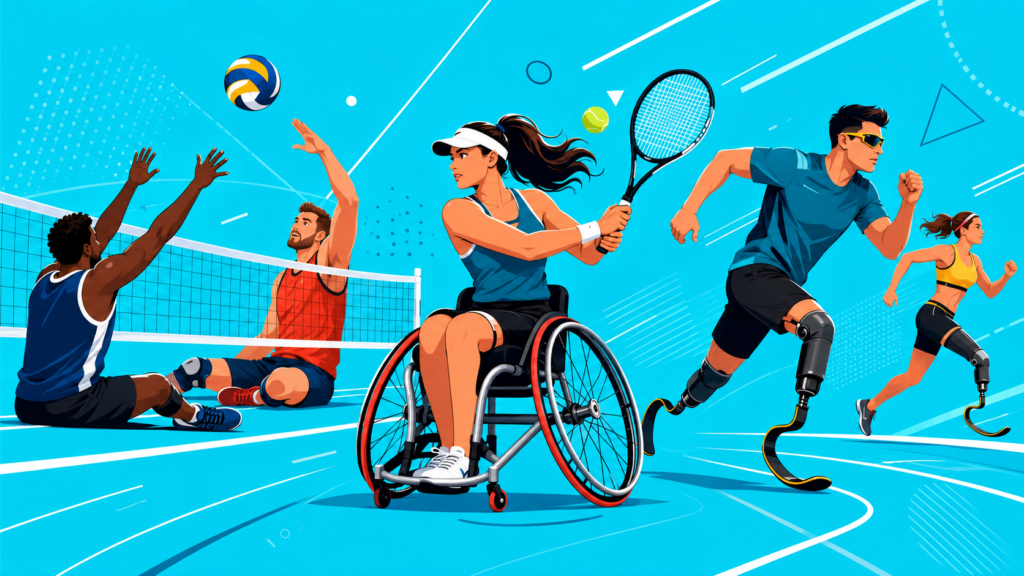
People with Disabilities and Sport in Bosnia and Herzegovina A Country Still Building Inclusion Bosnia and Herzegovina has one of the highest rates of disability in Europe. This is mostly because of the war from 1992 to 1995, the landmines, and the injuries that came after it. Policy documents usually say that around 10% of the population lives with some kind of physical, sensory, intellectual, or developmental disability. But this number is not fully certain, because there is no single national registry of persons with disabilities in the country. Bosnia and Herzegovina has a complicated government system, with the Federation of BiH, Republika Srpska, and Brčko District all having their own social protection systems. This means data on disability is collected in different ways depending on where you are, and it is hard to get one clear national picture. Sport is one of the areas where inclusion of people with disabilities can be seen the most in BiH. It is also one of the areas where results are the best at the top level, but research shows that participation at the everyday, grassroots level is still much lower than it could be. What Research Says Studies about disability sport in BiH and the region all point to the same thing: sport and physical activity clearly help people with disabilities live better, feel better, and connect more with society. But even with this known, the number of people with disabilities who actually take part in sport or recreation is still very small. Researchers mention a few main reasons for this: Money problems — many families with a disabled member already pay a lot for therapy, equipment, and transport, so there is little money left for sport. Buildings and infrastructure that are not accessible — many sports halls, facilities, and even transport are still not adapted for people with disabilities. Attitudes in society — several studies say that negative attitudes from society are actually a bigger problem than physical barriers. Not enough adapted programs — many sports clubs do not have staff trained to adapt training or classify athletes by disability type, so fewer people are able to join. Even less support for people with intellectual disabilities — awareness about the benefits of sport is even lower here than for people with physical disabilities. One good example is the research done on Bosnia’s top sitting volleyball players. Almost all of them are people with physical disabilities caused by the war, and the sport itself grew out of rehabilitation programs after the war. This is a pattern that can be seen across the whole region, not only in BiH. Success at the Top Level Even with all these problems, Bosnia and Herzegovina actually has a strong record in disability sport at the highest level: BiH first competed at the Paralympics in Atlanta in 1996, and has taken part in both the Summer and Winter Paralympic Games since then. The national sitting volleyball team is one of the best in the world. It has won medals at several Paralympic Games and World Championships, and has played at the European Championship 11 times since 1995. Sitting volleyball has given BiH some of its only medals ever at the Olympics or Paralympics as an independent country. At the 2024 Paris Paralympics, 14-year-old swimmer Ismail Barlov won BiH’s first individual Paralympic swimming medal — a silver in the 50m breaststroke, SB2 class. Athletes like Sanela Redžić, who competes in shot put (class F42), have represented the country at World and European Championships, and she also competed at the 2012 London Paralympics. The Paralympic Committee of Bosnia and Herzegovina, based in Sarajevo and founded in 1995, is a full member of the International Paralympic Committee and manages this whole system. Sport for People with Intellectual Disabilities There is also important, though less visible, work happening for people with intellectual and developmental disabilities: Special Olympics Bosnia and Herzegovina, started in 1997, now works with more than 20,000 people with intellectual disabilities across the country. In 2025, it joined the Special Olympics Global Coalition for Inclusion, which aims to give more young people access to inclusive sport and education. Programs like “Inclusion through Sports for Children with Developmental Disabilities”, a project with partners from BiH, Iceland, Lithuania, Montenegro, Romania, and Slovakia, and local projects like the “Sunce” School of Sports for Persons with Developmental Disabilities in Banja Luka, give children and young people free access to sport. For many of them, sport works almost like therapy, and it also helps them feel more part of society. BiH athletes with intellectual disabilities have had real success internationally too. Vesna Mišić won gold in futsal at the 2023 Special Olympics World Games in Berlin, and also won a regional 3×3 basketball tournament. Erasmus+ programs have helped BiH sports organizations build more inclusive practices, both in sport and in education. The Legal Side The Law on Sport in Bosnia and Herzegovina says clearly that discrimination based on disability is not allowed. It also officially recognizes the Paralympic Committee of BiH as the body responsible for sport for people with disabilities, next to the regular Olympic Committee. On paper, this should give people with disabilities equal rights in the sports system, and it should mean the state has to support their sporting activities. But in real life, this is often not the case. There is no single law in the whole country that brings together the basic rights of people with disabilities, and how well these rights are respected changes a lot between the Federation, Republika Srpska, and Brčko District. Groups like the Union of Organisations of Persons with Disabilities in Bosnia and Herzegovina keep pushing for the country to have clearer, more equal standards everywhere. Overall Picture So there are really two different stories happening at the same time. At the top level, Bosnia and Herzegovina does very well — the sitting volleyball team and individual Paralympians have brought real success, and a lot of this comes directly from the country’s war
STRIDE & GLIDE partners held an online progress meeting on upcoming activities, visibility and project reporting
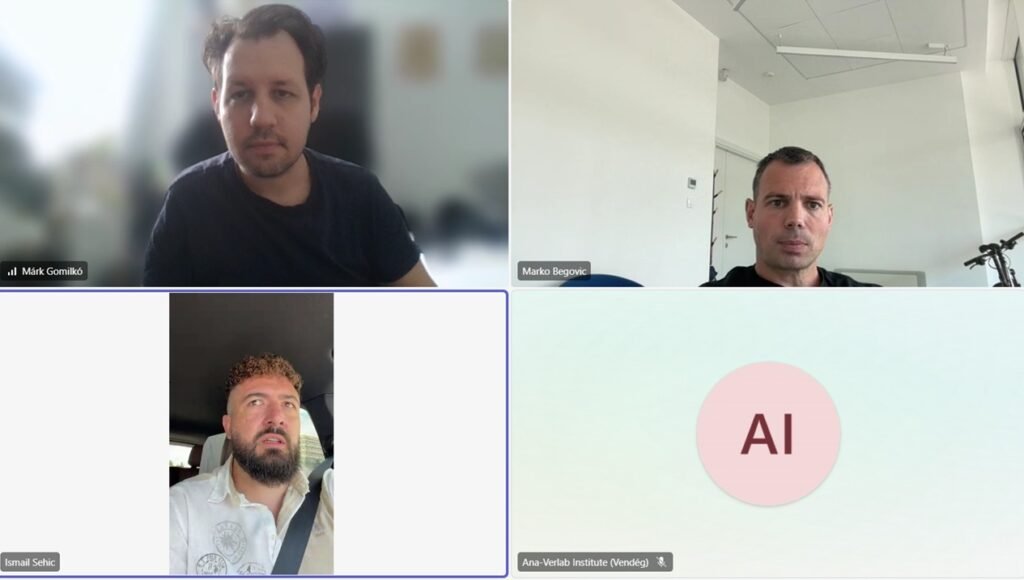
STRIDE & GLIDE partners held an online progress meeting on upcoming activities, visibility and project reporting The partners of the STRIDE & GLIDE project held an online progress meeting on 6 July 2026 to review the work completed so far, align the next implementation steps and strengthen the joint approach to upcoming project activities. The meeting gathered representatives of partner organisations from Bosnia and Herzegovina, Montenegro, Austria and Portugal, once again confirming the international character of the project and the importance of cooperation in promoting inclusion through sport. STRIDE & GLIDE is a project that connects sport, inclusion, education and the active participation of persons with disabilities. Through different activities, trainings, local events, knowledge exchange and promotion of good practices, the project aims to empower organisations, trainers, sport professionals and communities to create more accessible and inclusive sport environments for everyone. During the meeting, partners discussed the overall progress of the project, activities already implemented, preparation of the next deliverables and milestones, and the importance of high-quality documentation and evidence for all project events. Special attention was given to clearer reporting, better organisation of project materials and full alignment with the platform requirements and project administration procedures. One of the key topics of the meeting was the preparation and documentation of the Training of Trainers activities, as well as the planning of the next training, ToT2. Partners discussed the importance of collecting quality photos, video materials, participant testimonials, evaluation forms and other evidence that clearly shows the impact of the activities. It was highlighted that documentation should not be seen only as an administrative requirement, but also as a way to present the value of the work done with participants, local communities and organisations active in the field of sport and inclusion. A significant part of the meeting was dedicated to communication, dissemination and project visibility. Partners agreed that information about completed and upcoming activities should be published regularly, especially through the project website and social media channels. Through continuous communication, STRIDE & GLIDE aims to show that the project is active, that activities are taking place in different countries and that all partners are jointly working towards long-term results. The partners also discussed the use of a shared online space for project materials, where photos, news items, event information and other content can be uploaded for website updates and reporting purposes. This approach will support better coordination, easier tracking of activities and more professional preparation of public communication about the project. Special focus was also placed on local events and the need for each partner to prepare information about planned activities in a timely manner, including the date, location, type of event, cooperating organisations and a short description. This will help the project team present activities implemented in different local communities more clearly and demonstrate how STRIDE & GLIDE contributes to making sport more accessible for persons with disabilities. During the meeting, partners defined the main priorities for the upcoming period. The key focus will be the preparation and implementation of ToT2 activities, continued work on deliverables and milestones, stronger visibility of the project, publication of results achieved so far and better organisation of supporting documentation. Partners agreed that all materials should be prepared on time and that reporting should be finalised before the official deadlines to ensure a high-quality and professional implementation process. The meeting concluded with an agreement to organise the next online meeting in early August. Partners will continue holding regular monthly coordination meetings, which will serve as a space for activity updates, information exchange and joint planning of the next steps. This progress meeting represents another important step in strengthening cooperation among partners and confirms the shared commitment to the goals of the STRIDE & GLIDE project: promoting inclusive sport, increasing the visibility of persons with disabilities in sport activities and creating sustainable models that can continue beyond the project lifetime.
New Report Reveals Key Barriers Preventing Young People from Participating in Sport Across Five European Countries
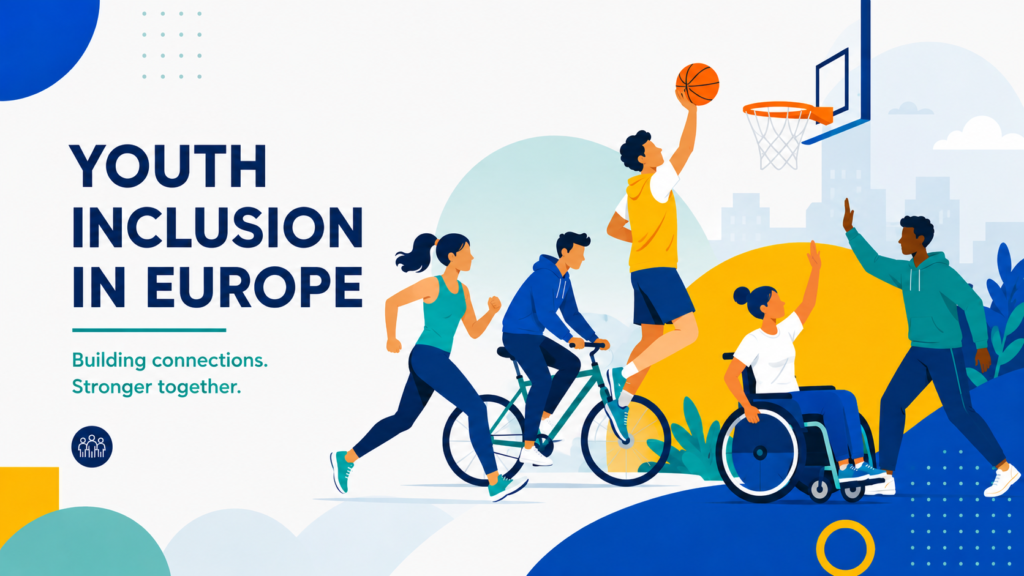
New Report Reveals Key Barriers Preventing Young People from Participating in Sport Across Five European Countries What keeps young people away from sport, despite recognizing its many physical, mental, and social benefits? The newly published “Sports Participation and Social Inclusion of Youth – Deep Analysis & Cross-Country Comparative Report”, developed within the Erasmus+ project Sport for Inclusion and Empowerment (SIE), provides evidence-based answers to this important question. The report presents the findings of a comprehensive study involving 381 young people aged 15–30 from Albania, Bosnia and Herzegovina, Montenegro, Greece, and Spain. The research explores young people’s participation in sport, the barriers they face, experiences of exclusion and discrimination, and the solutions they believe would make sport more accessible and inclusive. Among the key findings, the report highlights that: Financial constraints, lack of time, and limited access to nearby sports facilities remain the most common barriers to participation. Young people strongly recognize sport as a powerful tool for improving mental well-being, self-confidence, and social inclusion. Many respondents would participate more if sports activities were affordable, located closer to their communities, and offered in inclusive, welcoming environments. Schools, sports clubs, local authorities, and youth organizations are identified as the key stakeholders responsible for creating more inclusive opportunities. Beyond presenting the research results, the report offers practical recommendations for policymakers, sports organizations, educational institutions, local authorities, and youth organizations to strengthen the role of sport as a driver of social inclusion and equal opportunities across Europe. The publication was developed as part of the Erasmus+ Capacity Building in the Field of Sport project Sport for Inclusion and Empowerment (SIE) and serves as an important evidence base for future project activities and policy development.
Training of Trainers 1 in Sarajevo and Zenica: Building Knowledge for Inclusive Sport Through Stride & Glide
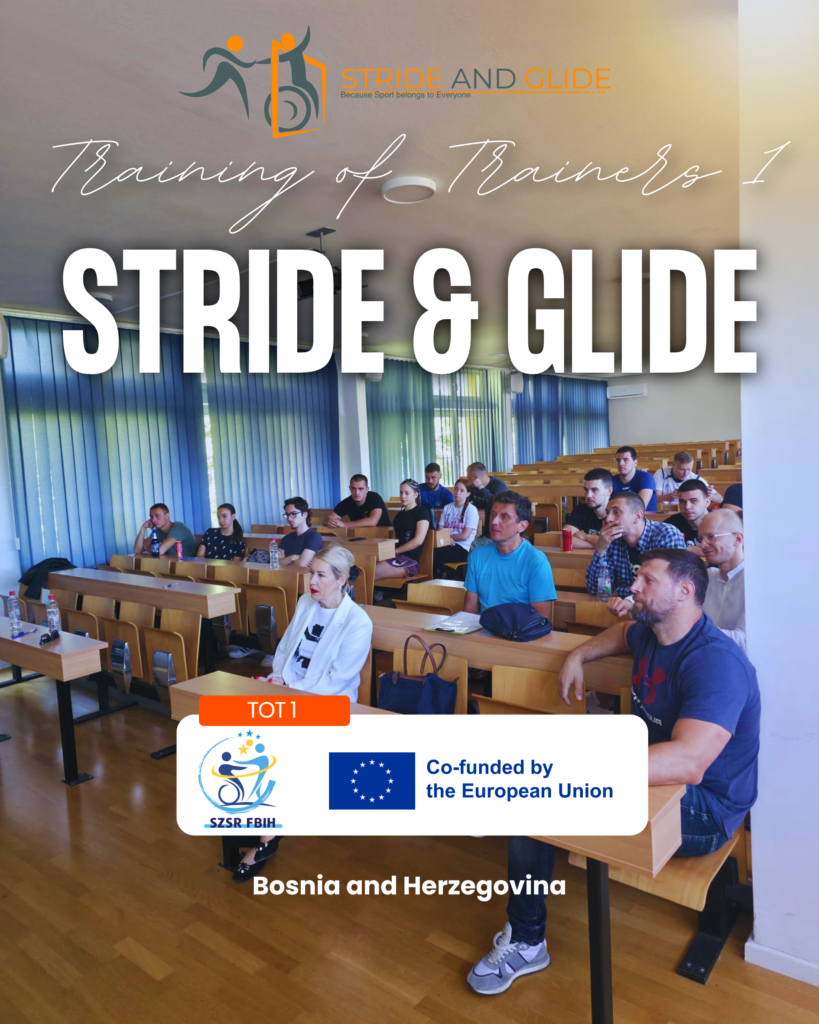
Training of Trainers 1 in Sarajevo and Zenica: Building Knowledge for Inclusive Sport Through Stride & Glide As part of the Erasmus+ Sport project Stride & Glide: Empowering Journeys for All Abilities, the Federal Association for Sport and Recreation in Bosnia and Herzegovina organized the first Training of Trainers – ToT 1 in Bosnia and Herzegovina. The training was implemented through two separate events, held on 29 May 2026 at the University of Sarajevo and on 19 June 2026 at the University of Zenica.The main goal of ToT 1 was to educate, empower, and connect trainers, professors, students, sport professionals, volunteers, and people who work directly or indirectly with persons with disabilities. By organizing the training in two different cities and at two important universities, the project team wanted to reach a wider group of participants and create stronger links between sport, education, inclusion, and community work.During the two training days, more than 50 trainers and participants were educated on the importance of inclusive sport, adaptive physical activity, accessibility, and the use of sport as a tool for dignity, visibility, and social inclusion of persons with disabilities. Why this training matters Persons with disabilities still face many barriers when it comes to participation in sport and physical activity. These barriers are not only physical. They are also social, educational, institutional, and psychological. Many sport facilities are still not fully accessible. Many local sport organizations do not have enough knowledge, equipment, or trained staff to include persons with disabilities in a safe, respectful, and meaningful way. At the same time, many trainers, coaches, teachers, sport workers, and volunteers want to support inclusion, but they often do not have enough practical training or confidence to organize inclusive activities. This is one of the key challenges that the Stride & Glide project aims to address.Through ToT 1, participants had the opportunity to better understand why inclusive sport is not a separate activity, but a necessary part of modern sport systems. The message of the training was clear: sport should belong to everyone. Training in Sarajevo – University of Sarajevo The first Training of Trainers was held on 29 May 2026 at the University of Sarajevo, in cooperation with the Faculty of Sport and Physical Education. The Sarajevo training gathered participants from different backgrounds, including sport, education, youth work, civil society, and disability-related fields. The event opened with introductory remarks from representatives of the Faculty of Sport and Physical Education and the Federal Association for Sport and Recreation in Bosnia and Herzegovina. The participants were introduced to the vision of the Stride & Glide project, its partners, planned activities, expected results, and the wider impact that the project aims to create in Bosnia and Herzegovina and partner countries. Special attention was given to the role of universities in creating long-term change. Universities are not only places of education. They are also spaces where future trainers, teachers, researchers, and community leaders are shaped. By bringing ToT 1 to the University of Sarajevo, the project directly connected academic knowledge with practical community needs. Training in Zenica – University of Zenica The second Training of Trainers was held on 19 June 2026 at the University of Zenica. By organizing the second training outside Sarajevo, the project ensured that knowledge and opportunities were not concentrated only in the capital city. Zenica was an important location for this training because it allowed the project to reach new participants, local professionals, students, sport workers, and people who work with persons with disabilities in different community settings. This approach reflects one of the core values of the Stride & Glide project: inclusion must be local, practical, and accessible to different communities.The training in Zenica created space for discussion, exchange of experiences, and reflection on how sport activities can be adapted to different needs, abilities, and environments. Participants discussed the importance of accessible sport infrastructure, trained professionals, adapted equipment, and stronger cooperation between institutions, sport clubs, universities, NGOs, and local communities. What participants learned During both training days, participants were introduced to the main objectives of the Stride & Glide project and the problems it aims to solve. The training covered the exclusion of persons with disabilities from regular sport and physical activity, the lack of accessible infrastructure, the need for trained coaches and volunteers, and the role of sport in fighting stigma and discrimination. The training also presented the project’s long-term vision. Stride & Glide wants to make inclusive sport a regular practice, not a special or occasional activity. The project aims to strengthen grassroots sport organizations, improve accessibility of sport events and infrastructure, increase participation of persons with disabilities, and support the transfer of knowledge beyond the project lifetime. Participants also learned more about the project’s planned activities, including training and education, local activities, sport events, accessibility improvements, dissemination, and sustainability. A special part of the training was dedicated to adaptive sport equipment and its future use in Bosnia and Herzegovina. Participants were introduced to equipment that can support hiking, running, swimming, beach, and pool activities for persons with disabilities. Looking ahead The successful implementation of Training of Trainers 1 in Sarajevo and Zenica is an important milestone for the project. It showed that there is strong interest, motivation, and need for this type of education in Bosnia and Herzegovina. In the next phases, the project will continue with additional training activities, local workshops, sport events, and practical actions that will bring inclusive sport closer to persons with disabilities and the communities around them.Stride & Glide continues with one clear message: More than education – a step toward systemic change Training of Trainers 1 was not only an educational activity. It was a starting point for creating a wider network of people who can promote inclusive sport in Bosnia and Herzegovina. The training helped participants understand that inclusion in sport requires more than goodwill. It requires knowledge, planning, communication, accessible spaces, appropriate equipment, and continuous cooperation between different sectors. Trainers and sport professionals have a key role in this
Testimonials – Training of Trainers 1
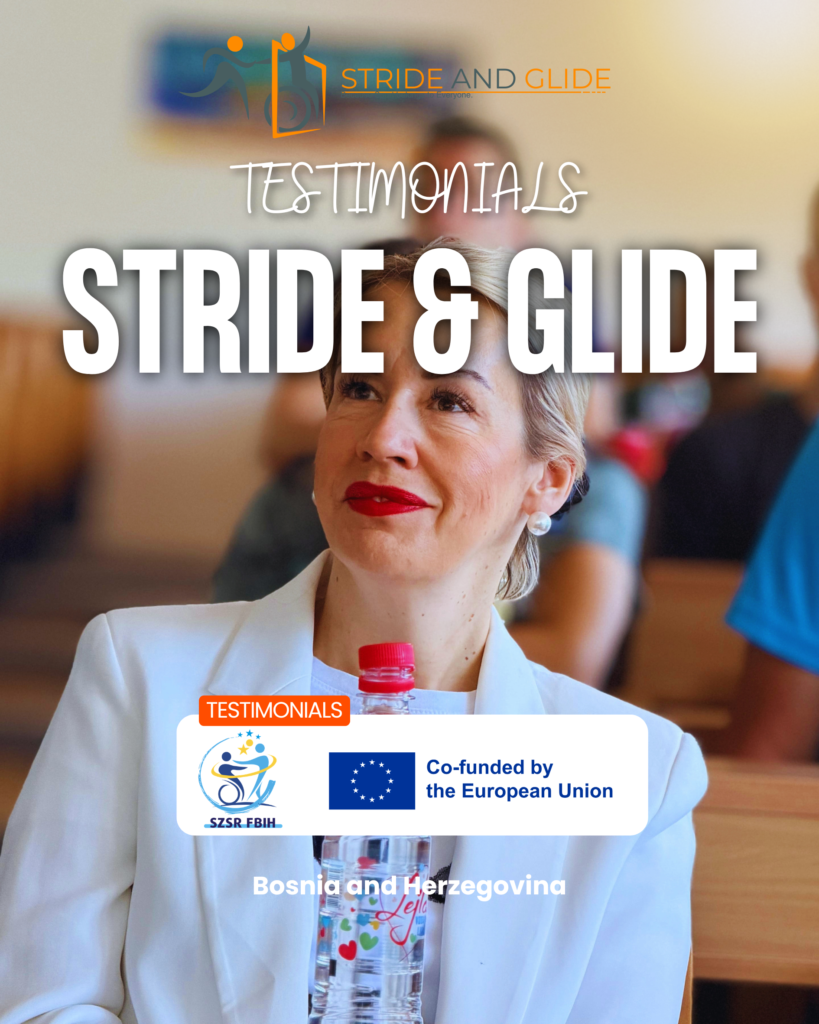
Slobodan KlačarThrough this training, I learned how important it is to create activities where every person feels included, respected and supported. It was very useful to see how sport can become more accessible for people with disabilities when trainers have the right knowledge and approach. I especially liked that we spoke about real situations and practical solutions, not only theory. This training gave me a better understanding of how small adaptations can make a big difference. Erol Kovačević I really enjoyed the training because it was practical, clear and full of positive energy. I learned new ways to support participants with disabilities during sport and outdoor activities. What I liked most was the focus on teamwork and communication, because those are very important when working with different groups. After this training, I feel more prepared to take part in inclusive activities and support others in a better way. Efendić AlmijaThis training helped me understand that inclusion starts with small steps. I learned how to adapt activities, communicate better and make participants feel safe and respected. The training also reminded me that people with disabilities should not be seen through limitations, but through their abilities and potential. I left the training with new ideas and more motivation to apply them in practice. Adi SjenarevićFor me, the most important lesson was that a trainer must be flexible and ready to adapt. Every person has different needs, and this training showed us how to respond to them in a simple and respectful way. I also learned that good preparation is very important before any activity. When we plan well, we can create a safer and more enjoyable experience for everyone. Tajra Zekić I enjoyed the atmosphere and the teamwork during the training. I learned that sport can be a powerful tool for confidence, friendship and equal participation. It was inspiring to see how running, swimming and hiking can be adapted so more people can take part. This experience showed me that inclusion is not only about access, but also about making people feel welcome. Nidal Behlulović The training gave me a better understanding of the barriers that people with disabilities face. I now feel more motivated to help create activities that are open to everyone. I learned that trainers have an important role in removing fear, building trust and encouraging participation. This training was a good reminder that inclusion should be part of every sport and recreational activity. Adi AvdićI liked that we did not only talk about inclusion but also about practical examples. I learned how trainers can make running, swimming and hiking safer and more accessible. The training helped me understand that inclusion requires attention, patience and creativity. I believe this knowledge can be used in many future activities with young people, athletes and people with disabilities. Nejira Kapo This was a very inspiring experience. I learned how important patience, communication and planning are when working with people with disabilities. The training helped me feel more confident because it explained inclusion in a simple and practical way. I also enjoyed meeting other participants and exchanging ideas with people who want to make sport more open to everyone. Alen Ćirić The training was useful because it connected sport, education and real-life situations. I learned that inclusion is not complicated when we have the right knowledge and attitude. What stayed with me the most is that every trainer can make a positive change if they are prepared to listen and adapt. I believe this training will help me in future work with different groups of participants. Muhamed Kopić I learned that being a trainer means much more than leading an activity. It means creating trust, supporting people and helping everyone feel that they belong. The training showed me that inclusive sport is not only about physical movement, but also about respect, dignity and teamwork. I enjoyed the training because it was useful, positive and easy to understand. Zunđa Amel This training opened my perspective. I learned that people with disabilities should be included in activities not as guests, but as equal participants. I especially liked the message that sport belongs to everyone, and that our role as trainers is to make this possible. The training gave me practical knowledge that I can use in future inclusive events and activities. Timur Smailbegović I enjoyed meeting new people and learning from different experiences. The training showed me how we can use sport to bring people closer together. I learned that inclusion is built through communication, trust and good planning. This was a very positive experience, and I believe the knowledge from this training can help us create better opportunities for people with disabilities. Siniša Kovač For me, the training was very meaningful because it focused on real inclusion. I learned how to think more carefully about accessibility and the needs of each participant. It was important to hear that trainers should not focus only on what someone cannot do, but on how to adapt the activity so they can participate. This training gave me a stronger sense of responsibility as someone involved in sport and community activities. Amel Mekić I liked the practical approach of the trainers. The examples were easy to understand and helped me see how I can use this knowledge in future activities. I learned that inclusion requires both knowledge and empathy. The training also showed that people with disabilities can enjoy sport and outdoor activities when the environment is supportive and well prepared. Tolić HanaThis training made me feel more confident to work with different groups. I learned that good communication and empathy are key parts of inclusive training. I also learned that every participant should feel seen, heard and respected. The atmosphere was friendly and motivating, and I really enjoyed being part of a group that wants to make sport more accessible. Elzar Rahman I learned that outdoor activities can be adapted when trainers are creative and prepared. The training motivated me to support more inclusive sport opportunities. I
ORIUNITE Awareness Campaign Event Held in Jajce during the Jajce Triathlon Challenge
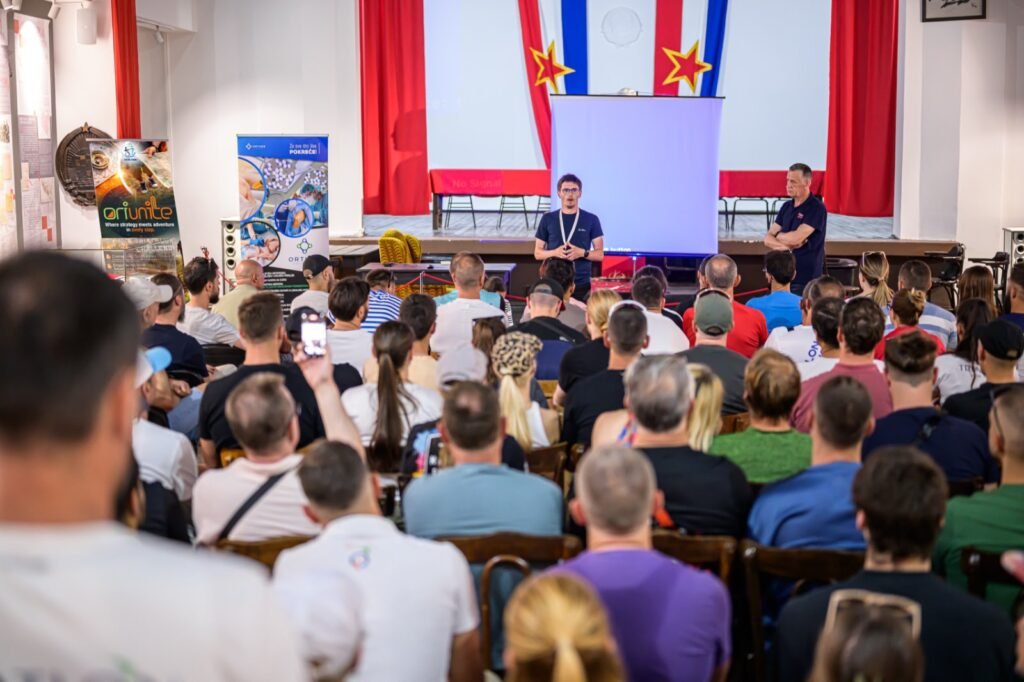
ORIUNITE Awareness Campaign Event Held in Jajce during the Jajce Triathlon Challenge As part of the ORIUNITE project, an Awareness Campaign Event was successfully organized in Jajce, Bosnia and Herzegovina, within the framework of the Jajce Triathlon Challenge. The event brought together more than 100 participants, including athletes, young people, local community members, sports enthusiasts, volunteers, educators, and representatives of different social and professional backgrounds. The main purpose of the event was to present the ORIUNITE project, share its mission with the wider public, and create a meaningful space where people could meet, exchange experiences, and reflect on the role of sport in building bridges between communities. ORIUNITE – Orienteering, Uniting Nations in Interactive Team Efforts – is an Erasmus+ Sport project that uses orienteering and outdoor sport as innovative tools for connection, cooperation, and reconciliation. The project is based on the belief that sport can go far beyond competition. It can become a platform for dialogue, mutual understanding, teamwork, and shared experience, especially in communities that have been affected by conflict, division, or social separation. Through joint activities, awareness campaigns, mapping, cultural exchange, and inclusive sport events, ORIUNITE aims to bring together young people from different backgrounds and encourage them to cooperate toward common goals. Orienteering, as a sport that requires trust, navigation, decision-making, and teamwork, offers a powerful symbolic and practical framework for overcoming barriers. It invites participants to move together, think together, solve problems together, and discover both the landscape around them and the people beside them. The ORIUNITE stand and awareness activities created an open space for conversation about the project and its goals. Participants had the opportunity to learn more about orienteering, the idea behind ORIUNITE, and how sport can be used as a tool for peacebuilding, inclusion, and community engagement. The event also helped connect people of different profiles: young athletes, experienced competitors, families, local citizens, volunteers, sport organizers, and community representatives. These encounters are at the heart of ORIUNITE. The project does not see sport only as physical activity, but as a shared language through which people can meet one another in a more open, equal, and human way. By being present at a dynamic and well-attended event such as the Jajce Triathlon Challenge, ORIUNITE was able to reach a wide and diverse audience. More than 100 participants engaged with the campaign, showing interest in the project and its mission. This response confirmed the importance of bringing awareness activities directly into community spaces, where people already gather, participate, and celebrate sport. The Awareness Campaign Event in Jajce was more than a promotional activity. It was a reminder that reconciliation is not built only through formal discussions or institutional processes. It is also built through everyday encounters, shared activities, and simple moments in which people from different backgrounds stand together around a common purpose. Jajce, with its history, diversity, and ongoing challenges, offered a powerful setting for this message. Through the ORIUNITE project, we want to continue creating opportunities where young people and communities can move beyond inherited divisions and discover new forms of cooperation. The event showed that sport has the power to open conversations, connect people, and inspire new ways of thinking about unity. It also showed that communities such as Jajce are not only places marked by division, but places full of potential, resilience, and people willing to build a more inclusive future. ORIUNITE will continue to promote sport as a tool for dialogue, reconciliation, and social inclusion, encouraging communities across Europe to recognize that shared paths can lead to shared understanding. Together, through movement, teamwork, and open dialogue, we can create stronger connections and take meaningful steps toward a more united future.
Info day about “STRIDE & GLIDE” at the Faculty of Sport and Physical Education
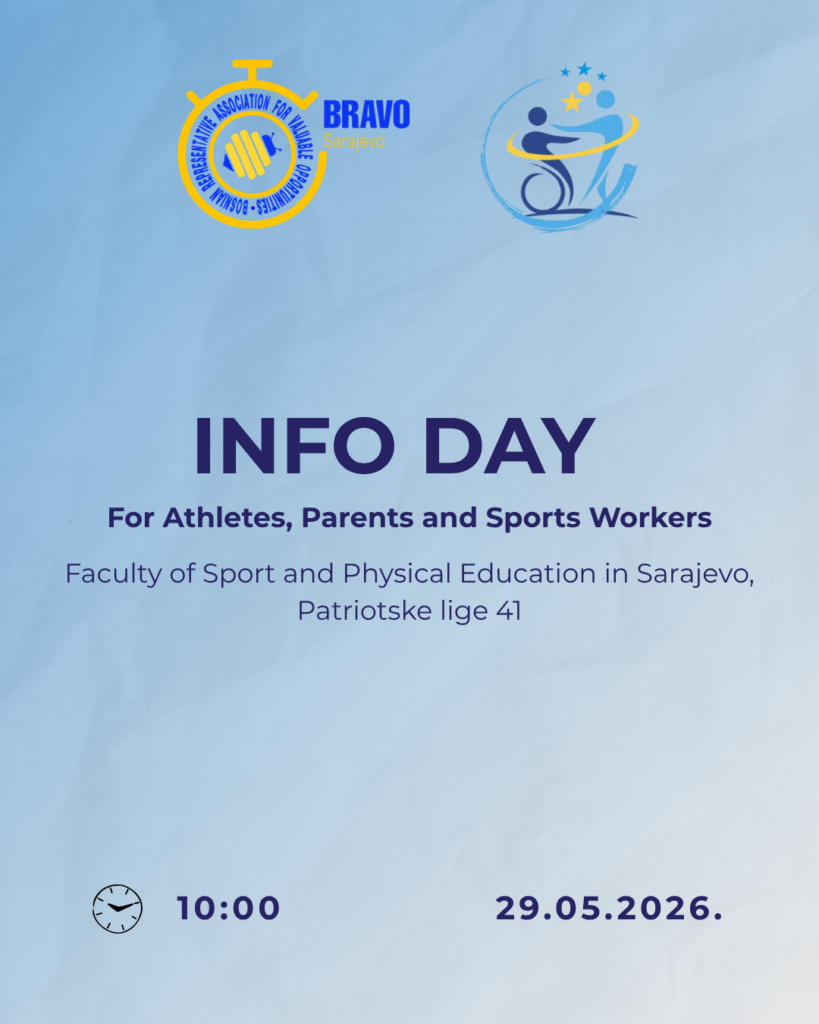
Info day about “STRIDE & GLIDE” at the Faculty of Sport and Physical Education SZSR FBIH in cooperation with BRAVO and the Faculty of Sport and Physical Education, University of Sarajevo, is pleased to announce the upcoming STRIDE & GLIDE Education and Info Day, which will take place on 29 May 2026 at 10:00 at the Faculty of Sport and Physical Education in Sarajevo. The event will gather athletes, parents, coaches, sports workers, educators, and representatives of sports organizations with the aim of promoting inclusion, accessibility, equal opportunities, and active participation in sport for people of all abilities. The STRIDE & GLIDE project is an international initiative implemented within the framework of the Erasmus+ programme, bringing together partners from Bosnia and Herzegovina, Montenegro, Austria, and Portugal. The project focuses on strengthening inclusive approaches in sport and recreation, improving cooperation between sports institutions and organizations, and empowering sports professionals through education, exchange of experiences, and innovative methodologies. One of the key components of the project are local trainings and educational activities that will be organized in all partner countries. Through these activities, more than 50 participants across Bosnia and Herzegovina will have the opportunity to gain new knowledge, exchange experiences, and strengthen their capacities in the field of inclusive sport and recreation. This event represents an important step toward building stronger, more inclusive, and socially responsible sports communities in Bosnia and Herzegovina, while also strengthening international cooperation and long-term partnerships in the field of sport and social inclusion. Location: Faculty of Sport and Physical Education, Sarajevo Date: 29 May 2026 Time: 10:00 The project foresees the training of more than 200 sports professionals, educators, and volunteers, while also organizing inclusive sports events involving hundreds of participants across partner countries. Through activities such as adaptive running, swimming, hiking, and recreational events, STRIDE & GLIDE seeks to demonstrate that sport truly belongs to everyone, regardless of physical ability. In Bosnia and Herzegovina specifically, the project will contribute to strengthening local capacities through educational activities, partnerships with institutions, accessibility improvements, and awareness campaigns. More than 50 participants across Bosnia and Herzegovina are expected to directly benefit from local trainings and educational opportunities during the implementation of the project. During the event, participants will have the opportunity to: Learn more about the STRIDE & GLIDE project and future activities Discover upcoming educational and training opportunities Meet organizations and professionals working in inclusive sport Discuss accessibility and equal participation in sports Explore possibilities for involvement in future local and international activities Connect with people who share the same vision of sport without barriers We warmly invite athletes, coaches, students, educators, volunteers, parents, institutions, and all interested community members to join us, learn more about the project, and become part of this inspiring journey toward inclusive sport for all.
BRAVO Participated in the International SIE Roundtable on Sport, Inclusion, and Youth Empowerment in Albania
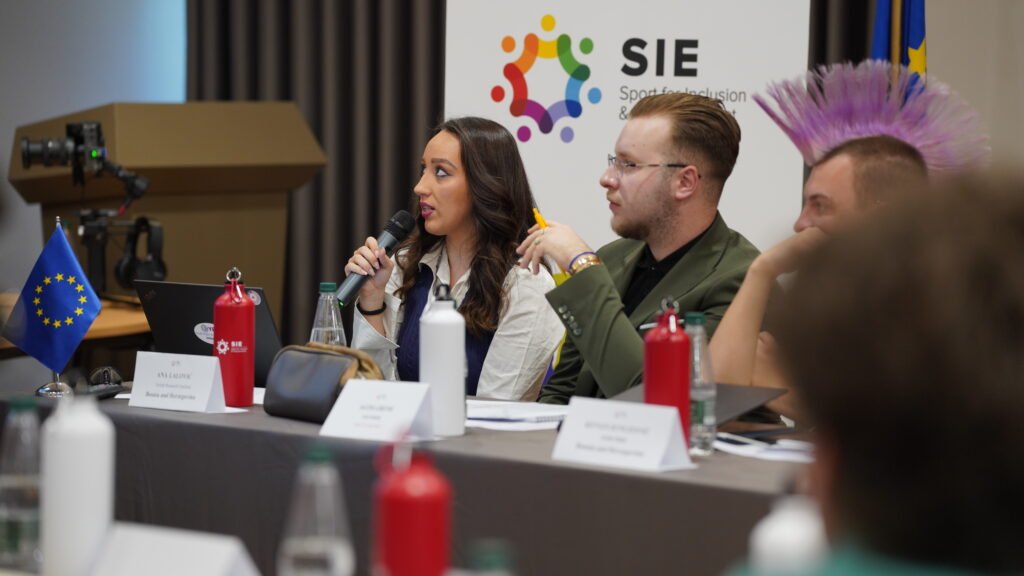
BRAVO Participated in the International SIE Roundtable on Sport, Inclusion, and Youth Empowerment in Albania The two-day “Sport for Inclusion and Empowerment (SIE) Roundtable” successfully gathered youth organizations, sports professionals, researchers, policymakers, and local stakeholders in Elbasan, Albania, creating a dynamic space for dialogue, cooperation, and the exchange of experiences focused on inclusive sport and youth empowerment. The event was hosted by YRCI Albania on 14–15 May 2026 at Hotel Skampa in Elbasan. Throughout the first day of the roundtable, participants reflected on the initial research findings developed within the framework of the SIE project. Discussions focused on the barriers young people continue to face in accessing inclusive and equal opportunities in sports, while also highlighting the powerful role sport can play in fostering empowerment, participation, equality, and social inclusion. The programme included presentations of the SIE project and research outcomes, followed by interactive roundtable discussions that encouraged participants to share local experiences and perspectives from their respective countries and organizations. The second day focused on transforming research insights into practical recommendations and sustainable future actions. Through focused roundtable sessions and collaborative discussions, participants explored concrete strategies for creating more accessible and inclusive sports initiatives for young people across the region. Special attention was given to the importance of stronger cooperation between youth organizations, sports clubs, researchers, local authorities, and policymakers in order to build long-term and impactful solutions that leave no young person behind. The SIE Roundtable represented an important milestone in strengthening regional cooperation and ensuring that young people’s voices remain at the center of future initiatives connected to sport, inclusion, and social empowerment. The event also provided participants with an opportunity to establish new partnerships, exchange good practices, and contribute to the development of recommendations that will support more inclusive sports environments in Bosnia and Herzegovina, Spain, Greece, Montenegro, and Albania. Implemented within the framework of the Erasmus+ Sport project “Sport for Inclusion and Empowerment (SIE),” the initiative continues to promote the role of sport as a powerful educational and social tool capable of encouraging equality, participation, and positive change within communities.
Orienteering Brings Together Young People from Teslić and Tešanj
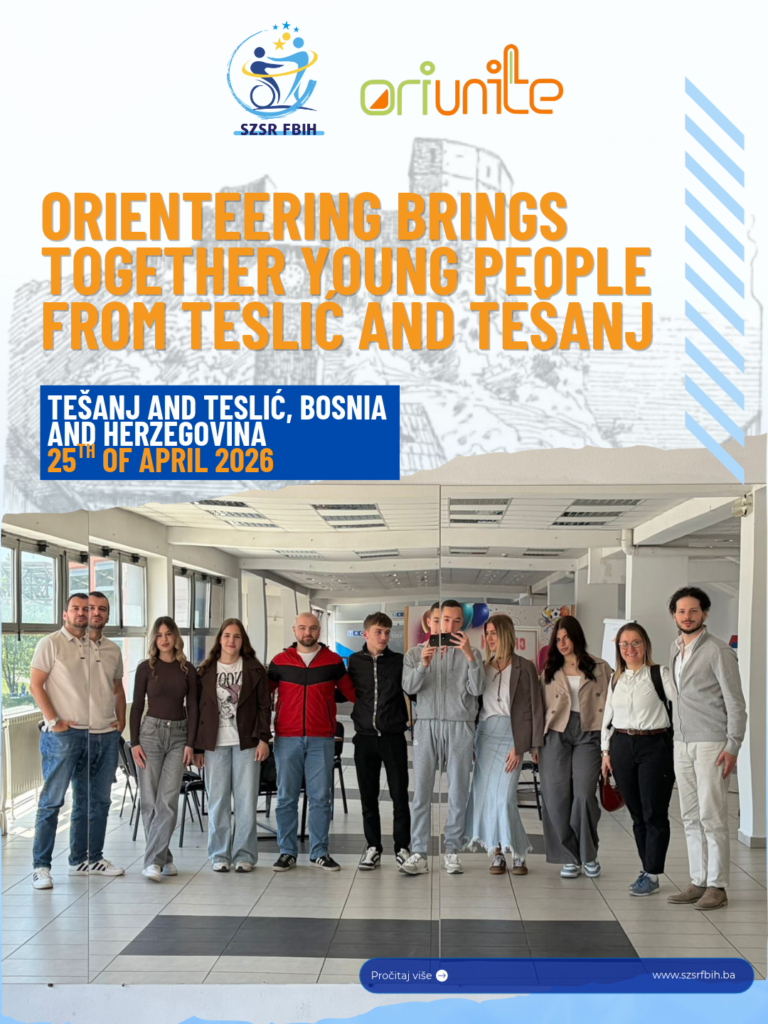
On 25 April 2026, Youth Club Teslić (Omladinski klub Teslić) hosted a one-day cultural workshop as part of the ORIUNITE project. The workshop was called “The Sport of Orienteering as a Means of Bringing Together Young People Separated by Conflict”. It looked at how a sport built on navigation, decision-making and teamwork can help young people reach across the divisions that still shape everyday life in Bosnia and Herzegovina.
ORIUNITE in Maglaj: Promotion of sports, inclusion and togetherness for youth
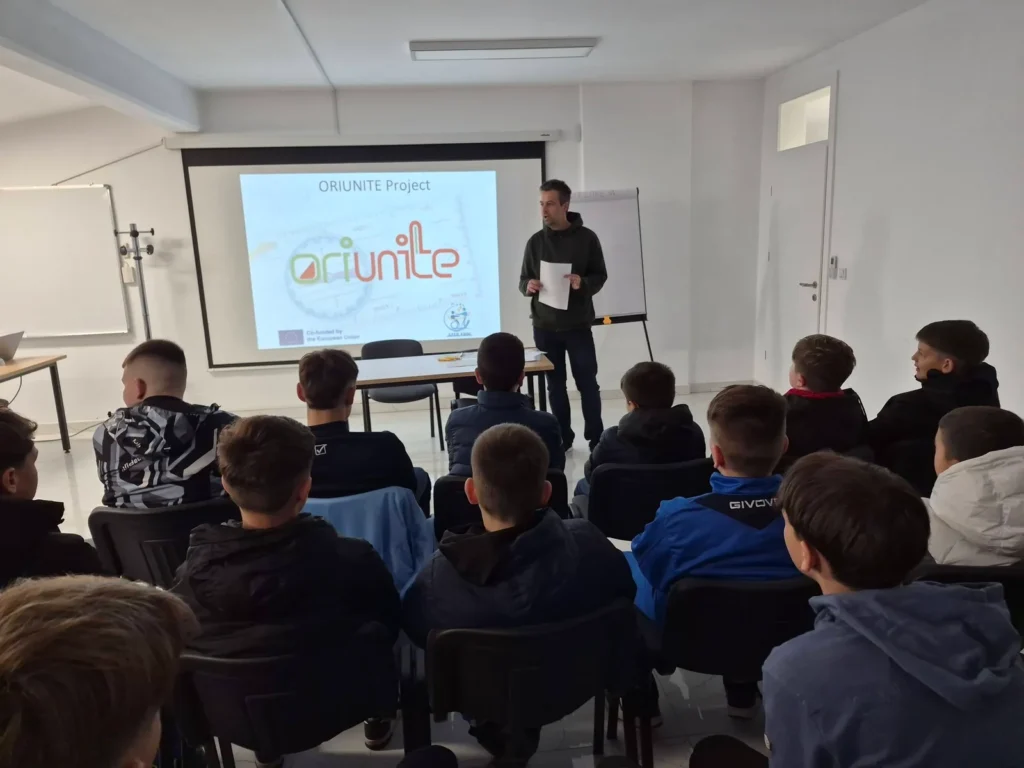
ORIUNITE in Maglaj: Promotion of sports, inclusion and togetherness for youth MAGLAJ, April 2, 2026: Organized by the “Grana” Maglaj Association and in cooperation with the Youth Resource Center, a successful presentation of the ORIUNITE project, “Sport for Inclusion and Peace,” was held in Maglaj. This event gathered 33 young people eager for new knowledge about sport, teamwork, and social activism. Orienteering as a Tool for Community Empowerment The primary goal of the meeting was to introduce the ORIUNITE project to local youth, with a special focus on promoting orienteering as an innovative tool for community development. Through a formal presentation, participants became familiar with “sport for development” methods that encourage social inclusion and intercultural connection. During the discussion, the youth showed great interest in orienteering, recognizing its digital and modern aspects that make this sport appealing to new generations. It was particularly interesting that the participants compared this sport, which is new to them, to a game of “hidden plans,” which further stimulated their curiosity and motivation to participate. The Path to Sarajevo and Mostar In addition to the educational component, the presentation also had a practical goal: planning the participation of Maglaj’s youth in upcoming competitions. The key outcomes of the event include: Awareness and Motivation: 33 young individuals are ready for new sporting challenges. Team Formation: Due to high interest, a selection of youth has been formed, giving them the opportunity to travel and test their skills. Field Competitions: Next steps have been agreed upon for participating in competitions in Sarajevo and Mostar. Quotes from the Participants The atmosphere at the Youth Resource Center was inspiring, as confirmed by the statements of the participants themselves: “I am happy that I will have the opportunity to travel to Sarajevo and Mostar and learn something new about orienteering.” “I am glad that events like this are happening in Maglaj. The presentation was interesting, and what makes me happiest is that we will have the opportunity to travel and test our skills in the field.” Conclusion The presentation in Maglaj confirmed a significant potential for developing orienteering in this local community as a means of youth activation. The Sport and Recreation Federation of FBiH continues to support projects that, like ORIUNITE, use sport as a bridge to connect and empower all members of our society.