Specialized sports equipment for people with disabilities handed over to the Faculty of Sport and Physical Education
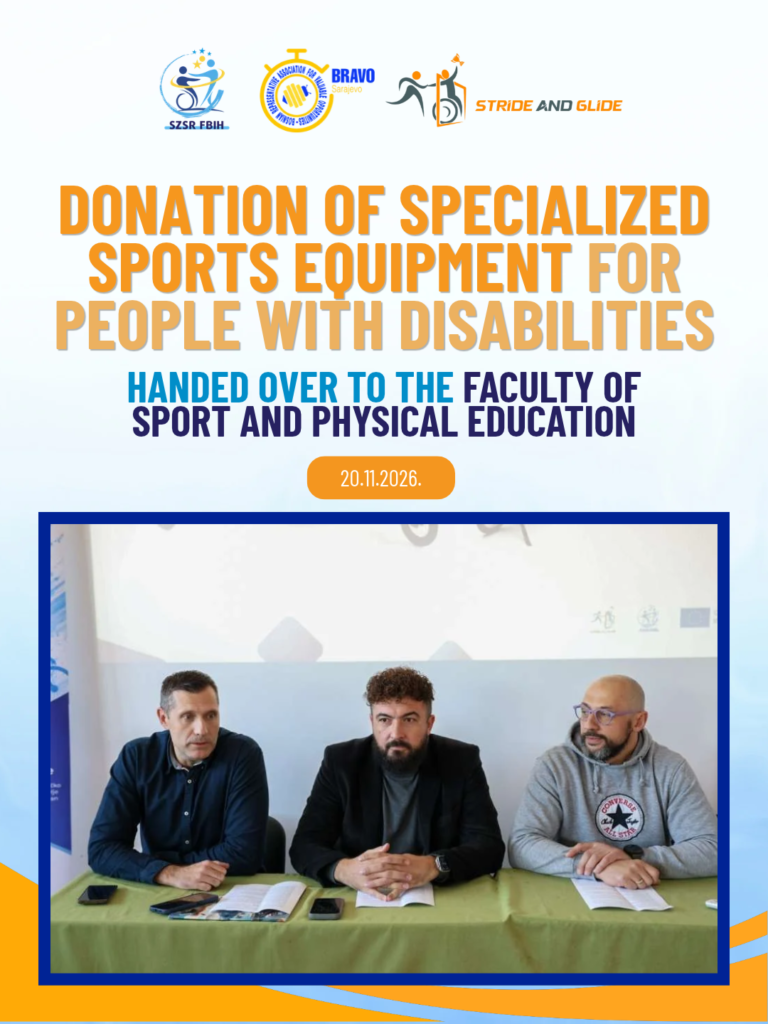
Specialized sports and recreation equipment for people with disabilities, worth €15,000, was officially handed over today to the Faculty of Sport and Physical Education, University of Sarajevo. The donation comes from the Sport and Recreation Association of FBiH and the organization BRAVO, as part of the international project STRIDE & GLIDE, co-funded by the European Union.
STRIDE & GLIDE – Donation of Specialized Sports Equipment
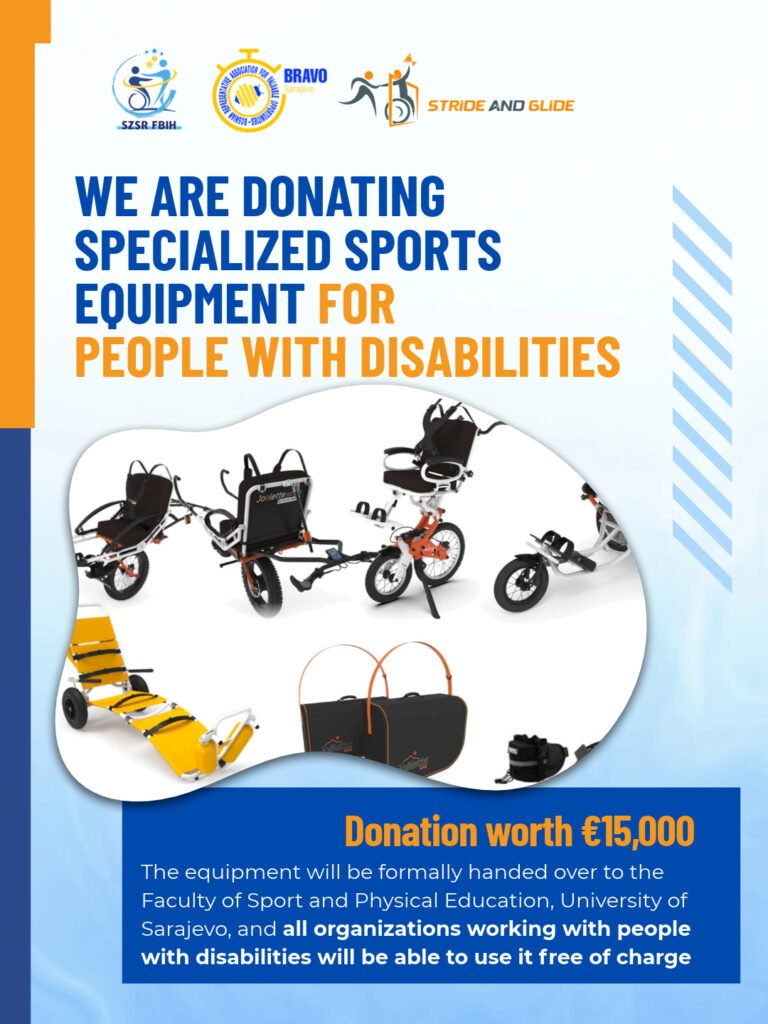
Federation of Sports and Recreation of the Federation of Bosnia and Herzegovina and the organization BRAVO are donating specialized sports and recreation equipment for people with disabilities, worth €15,000, to the Faculty of Sport and Physical Education, University of
Sarajevo. All organizations working with people with disabilities will be able to use the
equipment free of charge.
Stride & Glide November Newsletter
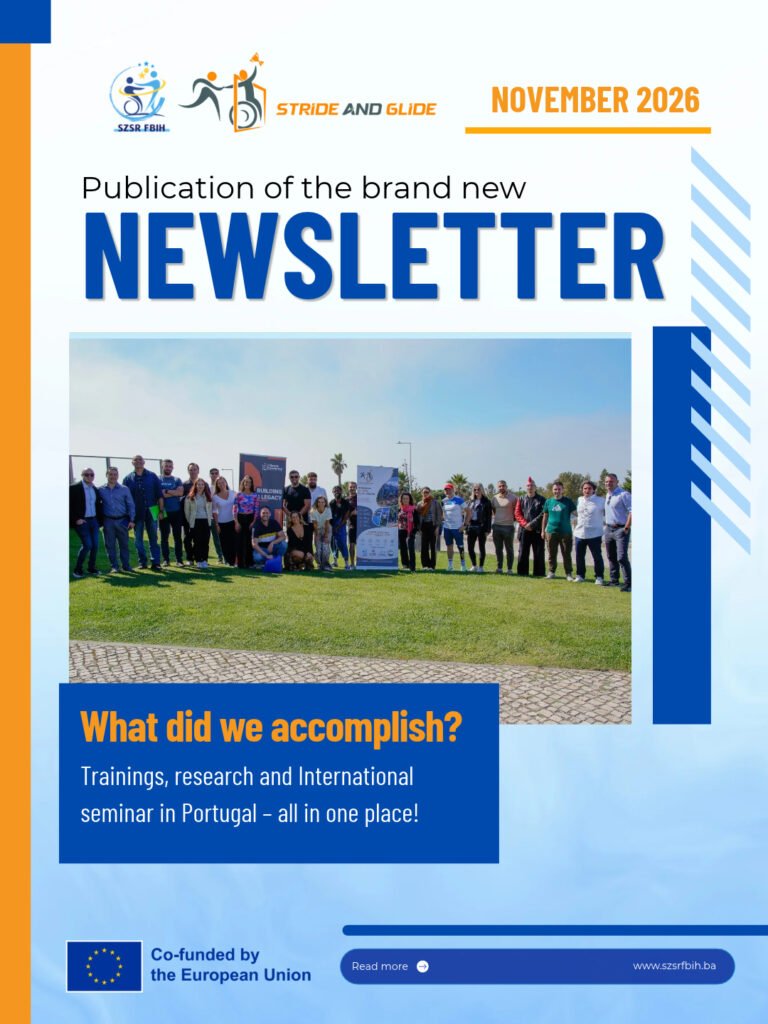
From May to September 2026, more than 570
coaches, teachers, students, volunteers and
support staff took part in two rounds of
training across the four partner countries. Each training was followed by a local sport event where participants put what they learned into practice.
STRIDE & GLIDE International Seminar in Portugal: Creating More Inclusive Opportunities Through Sport
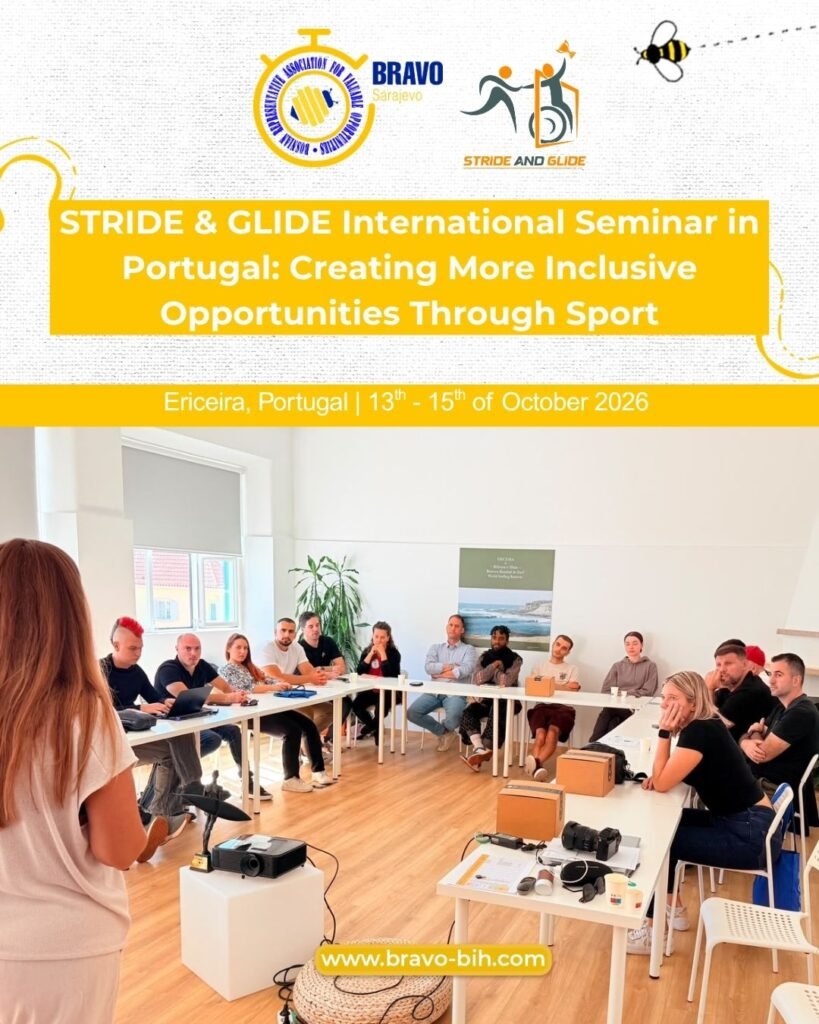
From 13 to 15 October 2026, Ericeira, Portugal, welcomed the STRIDE & GLIDE
International Seminar, bringing together trainers and representatives of partner
organisations from Bosnia and Herzegovina, Montenegro, Austria and Portugal.
Sarajevo Hosts International Orienteering Race as Part of the ORIUNITE Project
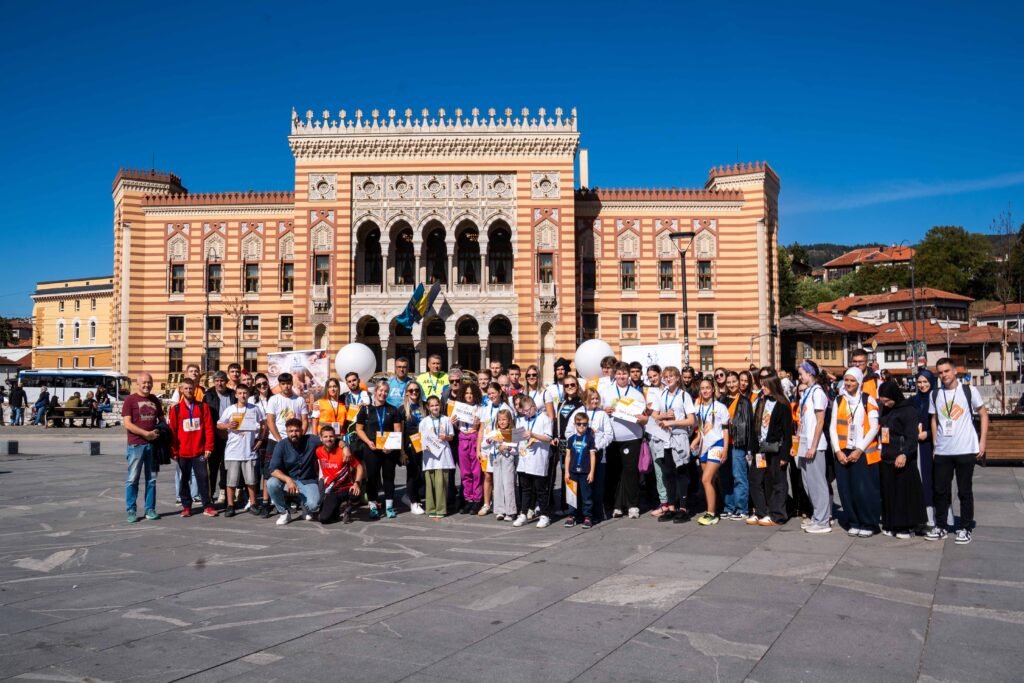
Sarajevo Hosts International Orienteering Race as Part of the ORIUNITE Project On 3 October 2026, Sarajevo hosted an international orienteering race organised as part of the Erasmus+ ORIUNITE project. The event brought together 59 participants from Bosnia and Herzegovina, Italy, Hungary, Croatia, Germany and Cyprus, giving them an opportunity to explore the city, connect with others and exchange experiences through sport. The event was organised by the Association for Sport and Recreation of the Federation of Bosnia and Herzegovina (SZSR FBiH) and the Orienteering Federation of Bosnia and Herzegovina, with the support of the ORIUNITE project partners. Orienteering requires more than physical fitness. Using a map, participants had to locate control points, make decisions about the best route and maintain their pace throughout the race. For some participants, it was also their first experience with orienteering. Holding the race in Sarajevo added a special dimension to the event. Participants had the opportunity to discover the city in a different way, exploring its streets through movement, navigation and sport. Beyond the competition itself, the event also created space for socialising and connecting with other participants. Conversations, mutual encouragement and the exchange of experiences contributed to the international atmosphere and highlighted the role sport can play in bringing people together. Through the ORIUNITE project, the partners are working to promote active lifestyles, sport, social connection and international cooperation. The international race in Sarajevo provided an opportunity to bring these values into a shared sporting experience. All participants received medals and certificates, while special prizes were awarded to the three best-ranked competitors. For the 59 participants from six countries, the Sarajevo race was an opportunity to meet new people, discover the city from a different perspective and spend a day combining sport, social interaction and international cooperation.
International ORIUNITE Orienteering Race in Sarajevo – Sign up and explore the city in a different way
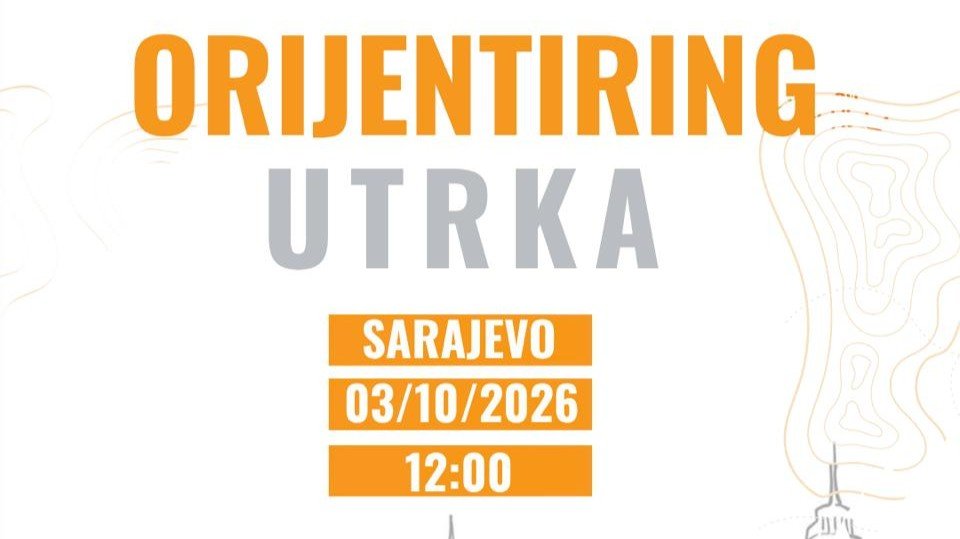
International ORIUNITE Orienteering Race in Sarajevo – Sign up and explore the city in a different way On October 3, 2026, Sarajevo will host an international orienteering race organized as part of the Erasmus+ project ORIUNITE. The race is organized by the Sports and Recreation Federation of the Federation of Bosnia and Herzegovina and the Orienteering Federation of Bosnia and Herzegovina, bringing together participants from Bosnia and Herzegovina, Italy, Hungary, Croatia, Germany, and Cyprus. The race starts at 12:00 PM, and participation is completely free. Sports, fun, and getting to know Sarajevo Orienteering is a sport that combines physical activity, spatial navigation, map reading, and quick decision-making. That is precisely why this race represents much more than a classic sporting event. Participants will have the opportunity to explore Sarajevo in an engaging and active way, meet new people, and spend time with participants from various European countries. Prior orienteering experience is not required, so those encountering this sport for the first time are warmly welcome. Medals, certificates, and prizes For all race participants, medals and participation certificates have been prepared as a keepsake of the ORIUNITE event in Sarajevo. In addition, special prizes are provided for participants who take the top three places. The goal of the event is not just competition, but also promoting physical activity, social connection, international cooperation, and discovering the city through sport. How to register? Registration for the ORIUNITE orienteering race is open until September 26, 2026. Race date: October 3, 2026 Start time: 12:00 PM Location: Sarajevo Entry fee: Free Registration deadline: September 26, 2026 After registrations close and the participant list is finalized, all registered individuals will receive additional information about the meeting point, race schedule, event organization, and other important details. We invite everyone interested to join us and experience Sarajevo in a completely different way – through sports, orienteering, and international socializing. Sign up, find your route, and see you at the start line on October 3 in Sarajevo! https://docs.google.com/forms/d/e/1FAIpQLSeNIqrTB8c2DsU2qVvSEwYteOJv1s0zAp54-WAoHZXaX8Umew/viewform
Stride and Glide: Preparing for Upcoming Project Activities
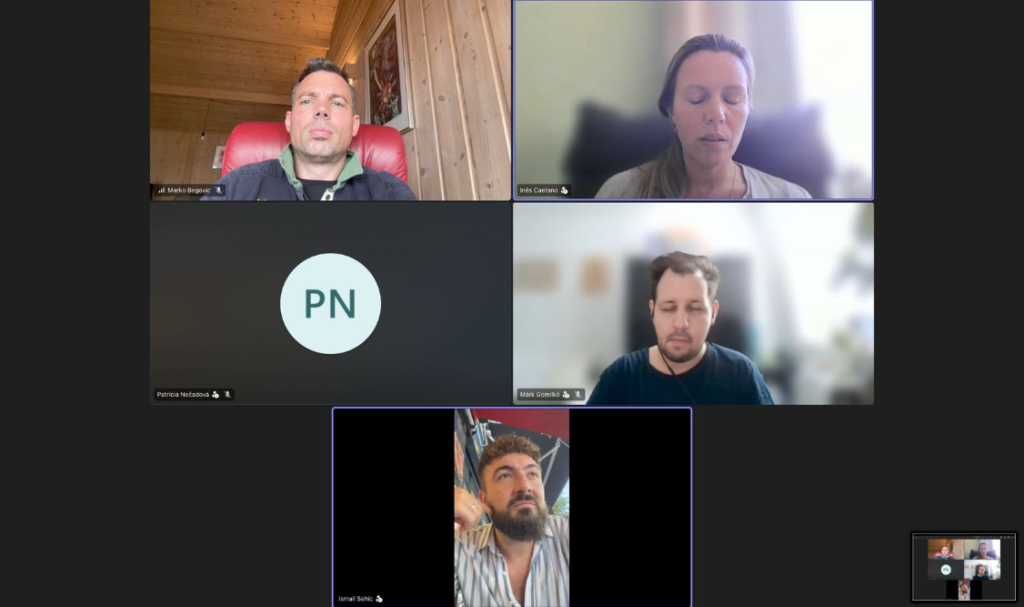
Stride and Glide: Preparing for Upcoming Project Activities Preparing for the Seminar in Portugal At the beginning of September, the Stride and Glide project team held a meeting to discuss upcoming activities and preparations for the next project events. One of the main topics of the meeting was the upcoming seminar in Portugal. The team discussed the planned participants, the agenda and organisational details, as well as the preparations that need to be completed ahead of the event. The participants’ roles and the activities planned for the seminar were also discussed to ensure that the programme is well prepared and coordinated. Planning Future Activities The meeting also focused on upcoming Stride and Glide activities, including the next steps and their implementation. Particular attention was given to coordination among team members and preparations for activities planned for the coming period. Midterm Meeting in Podgorica The dates for the project’s upcoming midterm meeting in Podgorica were also confirmed during the meeting. The meeting will bring project partners together to review progress so far and discuss the next stages of the project. The meeting provided an opportunity to coordinate responsibilities, exchange information and finalise preparations for the upcoming activities within the Stride and Glide project.
ToT2 – Part 2: Strengthening Trainers’ Capacities for Inclusive Sport Activities
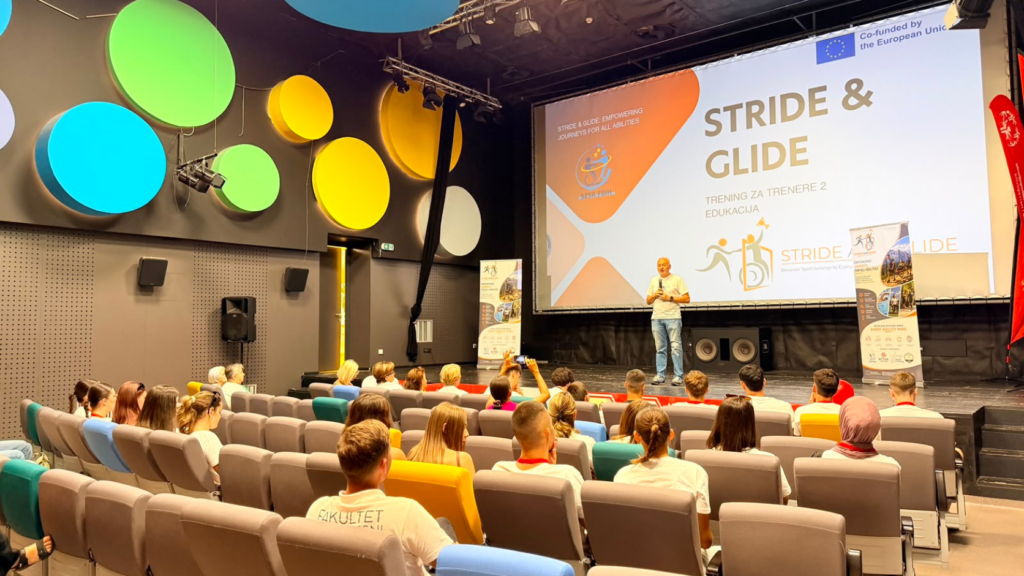
Cooperation with Special Olympics Bosnia and Herzegovina As part of the Stride and Glide project, the second part of the second Training of Trainers (ToT2 – Part 2) event was organised, focusing on educating individuals who work with persons with disabilities and strengthening their knowledge and skills for the delivery of inclusive sport and recreational activities. ToT2 – Part 2 was organised in cooperation with Special Olympics Bosnia and Herzegovina and brought together younger and more experienced trainers who work directly with persons with developmental and intellectual disabilities, often through a one-to-one approach. Running, Swimming and Hiking The training explored different approaches to working with persons with disabilities in sport and recreational activities, with a particular focus on running, swimming and hiking. The aim was to further empower trainers and other individuals working directly with participants, enabling them to provide appropriate support and facilitate safer and more meaningful participation in activities. Individual Approach and Inclusion The training also highlighted the importance of an individual approach, adapting activities to the needs of each participant and creating an inclusive environment in which persons with disabilities can actively participate in sport and recreation. A Step Towards More Accessible Sport The Training of Trainers activities represent an important component of the Stride and Glide project, which aims to strengthen the capacities of individuals and organisations working with persons with disabilities while creating new opportunities for their active participation in a variety of sport and recreational activities. Through its cooperation with Special Olympics Bosnia and Herzegovina and the education of trainers who work daily with persons with developmental and intellectual disabilities, ToT2 – Part 2 represented an important step towards creating a more accessible, safe and inclusive sporting environment for everyone.
ToT2 – Part 1: Training for More Inclusive Sport and Recreational Activities
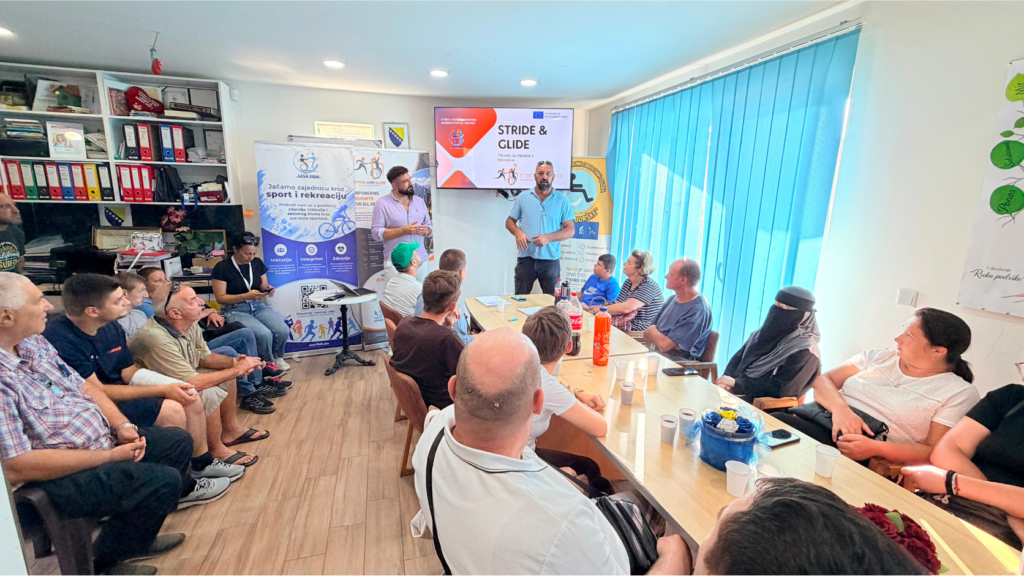
Education for More Inclusive Activities As part of the Stride and Glide project, the first part of the second Training of Trainers (ToT2 – Part 1) event was organised, focusing on educating individuals who work with persons with disabilities and strengthening the knowledge and skills needed to support inclusive sport and recreational activities. ToT2 – Part 1 was organised in cooperation with the “Ruka podrške” Association and brought together persons with disabilities, as well as younger and more experienced trainers who actively work with persons with disabilities. Particular attention was given to trainers and professionals who provide direct, one-to-one support to persons with disabilities. Presentation of Project Equipment An important part of the training was the presentation of equipment purchased as part of the Stride and Glide project. Participants were introduced to the equipment, its intended purpose and the proper ways of using it, enabling them to use it safely and effectively in their work and activities with persons with disabilities. Participants were also informed about upcoming project activities and the opportunities these activities will provide. Developing Knowledge and an Inclusive Approach During the training, participants had the opportunity to further develop their understanding of approaches to working with persons with disabilities in different sport and recreational settings. The focus was on creating safer, more accessible and inclusive environments that enable everyone to participate actively. The Importance of Training of Trainers Activities The Training of Trainers activities represent an important part of the Stride and Glide project, which aims to strengthen the capacities of individuals working with persons with disabilities and create more opportunities for shared participation in sport and recreational activities. By educating trainers and other individuals who work directly with participants, the project seeks to contribute to a more inclusive approach to sport and recreation and enable persons with disabilities to participate more actively and equally. Across both parts of the ToT2 event, more than 50 participants took part, demonstrating significant interest in and the need for further education and knowledge exchange in the field of inclusive sport and working with persons with disabilities.
Ten Local Events, One Big Question: Can Sport Really Work for Everyone?
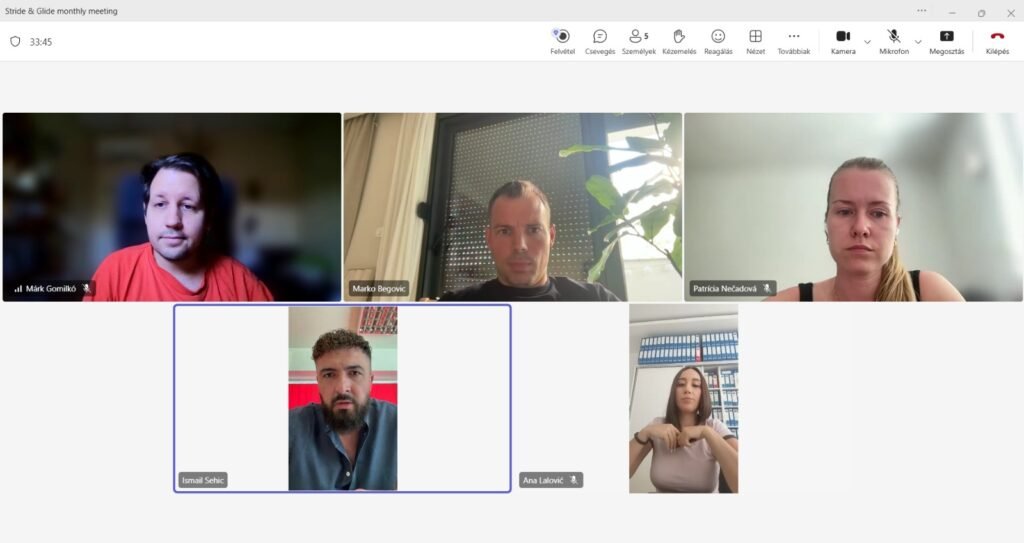
Ten Local Events, One Big Question: Can Sport Really Work for Everyone? STRIDE & GLIDE partners met online on 10 August 2026 to check progress and map out the project’s busiest stretch yet. Four organisations, one call. Representatives from Verlab Institute (Bosnia and Herzegovina), REGSPO (Montenegro), the Sports and Recreation Association of the Federation of Bosnia and Herzegovina (SZSR FBiH), and ACTIVE Austria logged on to go through five things: the second round of Training of Trainers, local events, sports equipment, the upcoming project conference, and how the project talks about itself online. Why this project exists STRIDE & GLIDE — full name “Empowering Journeys for All Abilities” — starts from a simple idea: running, swimming and hiking should be genuinely open to people with disabilities, not accessible in theory only. That means training the people who run the sessions, not just the people taking part. The consortium spans four countries — Bosnia and Herzegovina, Montenegro, Austria and Portugal — and pulls together some very different kinds of expertise: sport, research, education, civil society. SZSR FBiH leads the coordination; alongside Verlab Institute and the University of Sarajevo’s Faculty of Sport and Physical Education, REGSPO, ACTIVE Austria and Portugal’s Sport Embassy round out the team. The underlying pitch is that accessibility shouldn’t be bolted on as a side activity, it belongs in how sport gets planned from the start. Training is already paying off REGSPO came into the meeting with good news: its Training of Trainers activities are done, reaching roughly 150 participants. One rule got reinforced for everyone else: training sessions and local events can happen on the same day if it makes sense logistically, but they can’t be blurred together. Each needs its own participant list and its own paperwork. Photos, video, records — partners were reminded to document everything properly. Deadline for wrapping this stage up: 20 September 2026. Equipment that actually gets used This isn’t a project about talking through accessibility in a meeting room, partners want people to try it. Each organisation is buying at least one piece of equipment for its local activities, whether that’s for hiking, running or swimming, and it has to see real use at the local events. Options on the table include JOËLETTE and SOFAO gear, both built for outdoor and mobility-based activity. ACTIVE Austria is coordinating the final calls on what gets bought before the local events roll out. Ten events, real communities The next stretch is about ten local events: the point where the project stops being a conversation between partner organisations and starts showing up in actual communities. Partners have room to be flexible here: a STRIDE & GLIDE activity can be folded into a bigger local event, as long as it’s clearly visible and genuinely happening, not just a logo on a banner. Speaking of which — banners, photos, testimonials, all expected. What these events are meant to do: bring inclusive running, hiking and swimming to local communities show adapted equipment and accessibility solutions in action get people with and without disabilities doing activities together build up trainers’ and organisations’ capacity to run inclusive sport gather real participant stories connect clubs, professionals, institutions and civil society groups push the message of equal participation and inclusion leave behind models partners can keep using after the project ends Getting louder, not just staying active Communication got its own conversation. Partners agreed dissemination needs to get more consistent as things ramp up — and were nudged to actually tag the project’s channels and each other so content travels further instead of sitting in one organisation’s feed. It’s not just about the big milestones, either. Any talk, meeting or event connected to STRIDE & GLIDE is worth flagging to the communication team — date, name, a couple of lines on what happened. All of it also goes into the project’s shared dissemination tracker. What’s next The next check-in is 7 September 2026. Until then, partners are juggling several things at once: finishing Training of Trainers, locking in equipment, running and documenting local events, and prepping for the international conference — all while keeping the online presence active. It’s a lot happening in parallel. But that’s really the model here: training builds knowledge, equipment makes it usable, local events put it into practice, and the cross-country cooperation means nobody’s figuring it out alone. The idea driving all of it stays simple — sport should mean participation, connection and movement, for everyone, regardless of ability.